Showing 16 / 16 cards
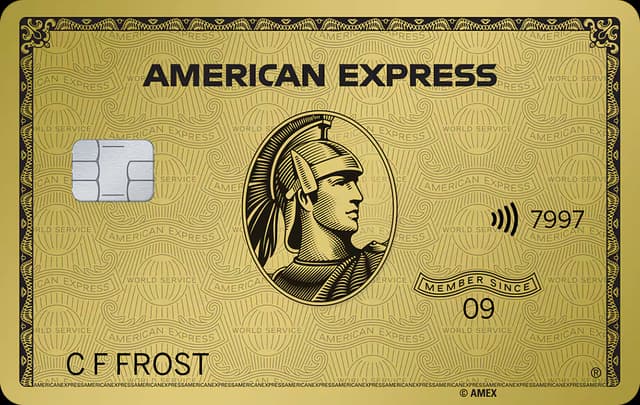
American Express® Gold Card
On americanexpress's website
Reward rate
1x-5x
Points
Annual fee
325US$
Up to $40
The American Express® Gold Card is the dominant dining and grocery rewards card in the US market, with 4x points at restaurants worldwide and 4x at US supermarkets forming a powerful base for everyday spending. The April 2026 refresh added 5x on prepaid hotels via Amex Travel, making the card meaningfully more competitive for travel bookings as well.
A few structural points that are essential for overseas Chinese users to understand upfront: First, this is technically a charge card with a Pay Over Time option, not a standard revolving credit card. The default expectation is full monthly payment; carrying a balance requires opting into Pay Over Time (with a 19.49%–28.49% variable APR) or Plan It® (fixed monthly fee). This is fundamentally different from every other card in this database. Second, American Express acceptance is not universal — while coverage has improved substantially, some small US merchants and most merchants in certain countries outside North America and Europe do not accept Amex. For overseas Chinese users who frequently shop at Asian supermarkets or smaller businesses, this is a practical limitation worth flagging. Third, Amex uses its own credit evaluation process and does not publish fixed score thresholds; approval is harder to predict than Chase or Citi.
The welcome offer structure is also unusual: Amex uses personalized offers rather than a single published rate. The headline "up to 100,000 points" is not guaranteed — many applicants receive lower offers. Additionally, Amex enforces a once-per-lifetime rule on welcome bonuses: if you have ever held this card and received a welcome offer, you will not receive another, regardless of how many years have passed. This is stricter than Chase's 24–48 month windows.
For someone who uses the credits correctly, the effective annual fee math is compelling: $325 fee minus $120 dining credit minus $120 Uber Cash minus $100 Resy credit minus $84 Dunkin' credit = effectively negative $99 — the card pays you to hold it, assuming you can consume all four credits. In practice, the dining credit partners are limited and the Resy and Dunkin' credits require specific behaviors; users who don't order from Grubhub or don't drink Dunkin' will fail to extract the full offset.
The Membership Rewards transfer ecosystem is one of the most valuable in the US, with 20+ partners including Air Canada Aeroplan (a key partner for transpacific redemptions) and Singapore Airlines KrisFlyer. This gives the card meaningful long-term value beyond everyday cash back for overseas Chinese users who travel between North America and Asia.
This card is best suited for US residents with 700+ credit scores who spend heavily on dining and groceries, can engage with the credit stack, and either pay in full monthly or deliberately use Pay Over Time for planned large purchases.
Apple Card

On Goldmansachs's website
Reward rate
1%-3%
Cashback
Annual fee
Free
Not supported (Goldman Sachs does not offer this feature)
The Apple Card is built for iPhone users who pay with Apple Pay regularly. With no annual fee, no foreign transaction fee, and no late fee, it offers one of the cleanest fee structures of any major US credit card. Rewards come in the form of Daily Cash — credited to your account the same day a purchase posts — with 3% back at Apple and select partners like Nike, Uber, Walgreens, and Booking.com, 2% back on all other Apple Pay purchases, and 1% back when using the physical titanium card.
To get the most out of this card, Apple Pay needs to be your default payment method. The 2% rate on general Apple Pay spending is competitive with flat-rate cards, but the moment you reach for the physical card — at merchants that don't support contactless payment, or when entering card details online manually — that rate drops to 1%, which is below average. If a significant portion of your spending happens at places that don't accept Apple Pay, the effective return rate will be lower than it appears.
A few things worth clarifying: First, there is no sign-up bonus. Unlike most US cashback cards that offer $150–$200 welcome bonuses, Apple Card has never offered one. Second, cash advances are not supported — Goldman Sachs does not offer this feature on Apple Card. Third, the 3% partner merchant list changes over time; always verify on Apple's benefits page before assuming a merchant qualifies. Fourth, this card requires an iPhone to apply and manage — there is no web-based account management equivalent to a standard bank portal.
The card is best suited for someone with a FICO score of 670 or above who is already embedded in the Apple ecosystem. It is not a good first card for someone building credit from scratch, and it is not the right card if you frequently shop at merchants that don't accept Apple Pay.
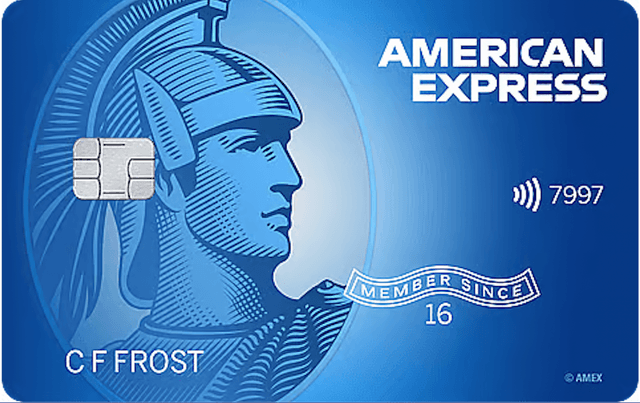
Blue Cash Everyday® Card from American Express
On americanexpress's website
Reward rate
1%-3%
Cashback
Annual fee
Free
Up to $40
The Blue Cash Everyday® Card from American Express is a straightforward no-annual-fee cash back card built around three everyday spending categories: U.S. supermarkets, U.S. gas stations, and U.S. online retail purchases, each earning 3% cash back on up to $6,000 per year (then 1%). All other purchases earn 1%.
This card is a natural entry point for overseas Chinese users new to the U.S. credit system. It requires no annual fee commitment, has a relatively accessible credit score threshold (Good, 670+), and its reward structure is simple enough to use without optimization. The $200 welcome offer requires only $2,000 in spending over 6 months — a realistic target for most households.
A few things worth noting upfront: First, the 3% categories each carry a $6,000 annual cap ($500/month equivalent). For high spenders in any single category, this card stops being the best tool after the cap is reached — you'll want a second card to handle overflow. Second, this card charges a 2.7% foreign transaction fee, making it unsuitable for international purchases or travel abroad. Third, like all Amex products, acceptance is not universal at smaller U.S. merchants, though coverage at mainstream U.S. retailers is generally strong.
The two statement credits are meaningful but conditional. The $84 Disney Bundle credit ($7/month) only applies to the bundled Disney+/Hulu/ESPN+ subscription at $9.99 or more and requires enrollment. The $180 Home Chef credit($15/month) requires an active Home Chef meal kit subscription — useful only if that service fits your household. If you don't use either service, these credits are worth $0, not $264.
The 0% intro APR for 15 months on both purchases and balance transfers is one of the strongest no-fee offers on the market, and NerdWallet named this card the 2026 Best 0% APR Credit Card for Purchases. For someone consolidating debt or making a large planned purchase, this feature alone can justify holding the card.
Cash back is issued as Reward Dollars, which can only be redeemed as statement credits or at Amazon.com checkout — not transferred to airline or hotel partners. If your goal is travel rewards or points flexibility, this card is not the right tool; consider the Amex Gold Card or a Chase Sapphire product instead.
This card is best suited for U.S. residents or new immigrants who spend regularly on groceries, gas, and online shopping, want a simple and free card as a primary or backup card, and may benefit from the intro APR period.
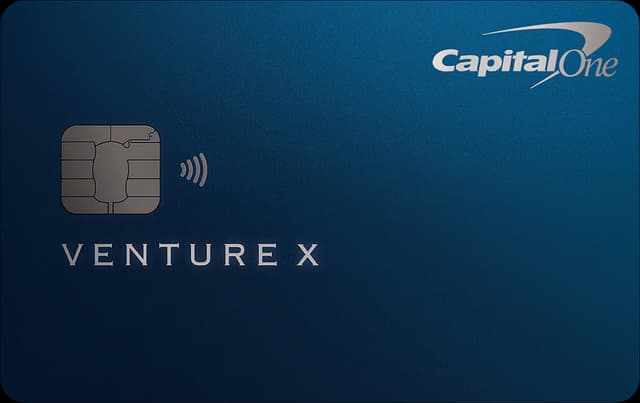
Capital One Venture X Rewards Credit Card
On CapitalOne's website
Reward rate
2x-10x
Points
Annual fee
395US$
Up to $40
The Capital One Venture X is the simplest premium travel card in the US market to justify financially. The math is almost embarrassingly clean: $395 annual fee, minus $300 travel credit, minus 10,000 anniversary miles worth $100 in travel = net cost of approximately negative $5 per year for any cardholder who uses the portal. No complex monthly credit stacks, no narrow partner restrictions, no enrollment hoops — just two automatic benefits that cover the fee.
The earning structure reinforces this simplicity. Portal bookings earn 10x (hotels, rental cars) and 5x (flights, vacation rentals), but even off-portal the flat 2x on everything makes it one of the best everyday spending cards in the premium category. A cardholder who puts all their spending on this card earns at minimum 2 cents per dollar in travel value — a rate that beats most no-annual-fee cards.
Miles can be redeemed at 1 cent each through Capital One Travel (fixed value) or transferred to 15+ partners including Air Canada Aeroplan, Singapore Airlines KrisFlyer, Turkish Airlines Miles&Smiles, and Avianca LifeMiles. The transfer ecosystem is smaller than Chase or Amex but includes several high-value sweet spots for transpacific redemptions — Aeroplan in particular is a key partner for overseas Chinese users traveling between North America and Asia.
However, a significant lounge policy change took effect February 1, 2026 that meaningfully reduces the card's value proposition for travelers with companions. The previously unlimited free guest access to Capital One Lounges was eliminated; guests now cost $45 per adult. Authorized users no longer receive lounge access automatically — they must pay a $125 annual fee per person to unlock it. Priority Pass guest access was also removed (guests now $35 each). The only exception: primary cardholders who spend $75,000 in a calendar year unlock complimentary guest access for that year and the next. This change has generated considerable dissatisfaction among cardholders (visible in recent reviews) and is a material downgrade from the card's launch proposition.
A few other important notes: First, Capital One does not impose a penalty APR — a rare and cardholder-friendly policy. Second, the authorized user fee remains $0 despite the lounge access change, which preserves value for couples managing a shared rewards balance. Third, Capital One's transfer partners skew toward international carriers (Avianca, Turkish, Wyndham) with fewer domestic US airline options compared to Chase; travelers primarily flying domestic US routes may find the Chase ecosystem more useful.
This card is best suited for US residents with 740+ credit scores who want straightforward premium travel rewards without managing a complex credit stack. It is the most defensible premium card for a traveler who primarily flies solo, books through portals, and wants near-zero effective annual fee without doing mental math every month.
Chase Freedom Flex®
On Chase's website
Reward rate
1%-5%
Cashback
Annual fee
Free
$10 or 5% of amount, whichever is greater
Up to $40
Chase Freedom Flex® is a no-annual-fee cash back credit card issued by Chase (JPMorgan Chase), running on the Mastercard network. It is well-suited for everyday spenders who want to maximize returns across multiple spending categories without paying an annual fee.
Who It's For
Ideal for US residents with good to fair credit (580+) who are building or strengthening their credit history. Particularly relevant for new immigrants who have obtained an SSN and established some credit foundation, young professionals managing everyday expenses, and budget-conscious consumers who prefer straightforward cash back over complex points systems.
How You Earn
Freedom Flex uses a tiered cash back structure. The headline feature is a 5% quarterly rotating category — each quarter, Chase designates specific merchant categories (such as grocery stores, gas stations, Amazon, or dining) where cardholders earn 5% back on up to $1,500 in combined purchases, after activation. Beyond that, the card offers a permanent 5% on Chase Travel bookings, 3% on dining and drugstores, and 1% on everything else. A Lyft bonus (2% total through September 2027) adds additional value for ride-share users.
Welcome Offer
New cardmembers can earn a $200 cash back bonus after spending $500 within the first 3 months of account opening. Not available to current cardmembers or those who received this bonus within the past 24 months.
Key Benefits
The card comes with a strong suite of protections: cell phone protection (up to $800 per claim), purchase protection (120 days), extended warranty, trip cancellation insurance (up to $6,000 per trip), and auto rental coverage. New cardmembers also receive 6 months of complimentary DashPass (DoorDash/Caviar).
Things to Watch
Freedom Flex charges a 3% foreign transaction fee, making it unsuitable for international travel spending. The 5% rotating categories require manual quarterly activation — missing the activation window means losing the bonus rate entirely. The regular APR (18.24%–27.74%) is relatively high, so carrying a balance will quickly erode any rewards earned. SSN is required for application, which limits accessibility for very new arrivals without an established credit file.
Chase Freedom Unlimited®
On Chase's website
Reward rate
1.5%-5%
Cashback
Annual fee
Free
Up to $40
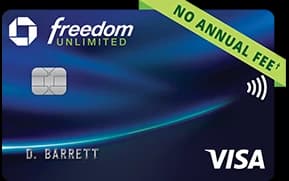
The Chase Freedom Unlimited® is one of the most versatile no-annual-fee cash back cards in the US market. Its tiered rewards structure — 5% on Chase Travel, 3% on dining and drugstores, and a flat 1.5% on everything else — makes it a strong everyday card, especially for people who eat out frequently or want a reliable catch-all rate without tracking rotating categories.
The $200 welcome bonus is achievable with just $500 in spending over 3 months, which is a low bar compared to most competing cards. Combined with the 15-month 0% intro APR on both purchases and balance transfers, this card is also worth considering for those who need short-term financing flexibility.
A few things to keep in mind: First, there is a 3% foreign transaction fee, making this card a poor choice for international spending — users who travel or shop abroad should pair it with a no-FX-fee card. Second, the 5% travel rate is only for bookings through the Chase Travel portal; travel purchased directly through airlines or hotels earns just 1.5%. Third, Chase applies the 5/24 rule — applicants who have opened 5 or more credit cards (across all banks) in the past 24 months will typically be denied, regardless of credit score.
This card is best suited for US residents with a credit score of 670 or above who want simple, uncapped cash back without an annual fee. It works especially well as a companion to a Chase Sapphire card, where cash back points can be converted to Ultimate Rewards and transferred to airline and hotel partners at higher value.
Chase Sapphire Preferred® Card
On Chase's website
Reward rate
1x-5x
Points
Annual fee
95US$
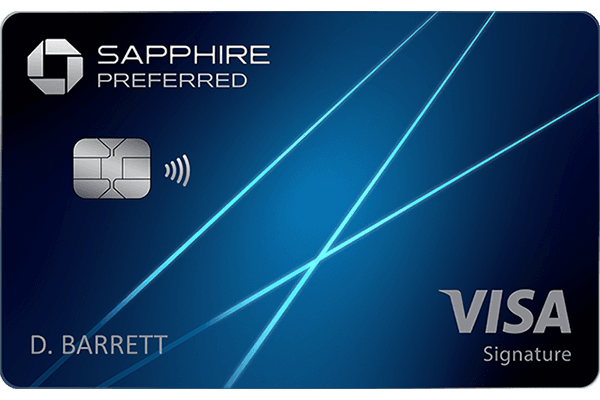
The Chase Sapphire Preferred® is the most recommended entry-level travel rewards card in the US market — and for good reason. At $95 per year, it offers a combination of earning rates, transfer partners, and travel protections that no no-annual-fee card comes close to matching. The 75,000-point welcome bonus alone is worth $937.50 through Chase Travel or $1,125–$1,500+ when transferred to partners like Hyatt or Singapore Airlines KrisFlyer, making the first year's value proposition essentially unassailable.
The card's core strength is the Ultimate Rewards ecosystem. Points are worth 1.25 cents each through Chase Travel, but transfer 1:1 to 14 partners — including United, Air Canada Aeroplan, Singapore Airlines, and Hyatt — where experienced users regularly extract 2–3 cents per point on premium cabin flights or luxury hotel stays. For overseas Chinese users in particular, Air Canada Aeroplan offers strong value on transpacific awards, and Singapore Airlines KrisFlyer is one of the most accessible premium cabin redemption programs for Asia routes.
A few things to understand clearly: First, the $5,000 spending requirement for the welcome bonus is significantly higher than Freedom Unlimited ($500) or Wells Fargo Active Cash ($500) — it's targeting people with real spending volume. Second, there is no intro APR on purchases or balance transfers; this is not a card for financing. Third, the 5/24 rule applies — Chase will typically deny applicants who have opened 5+ cards across all banks in the past 24 months. Fourth, the $50 hotel credit is restricted to bookings through Chase Travel, and those hotel purchases are excluded from the 5x earning rate (earning only 1x instead) — a trade-off worth noting. Fifth, the welcome bonus exclusion is open-ended: Chase may deny the bonus based on prior card history and the number of cards opened and closed, with no fixed time window published.
The card is best suited for US residents with a credit score of 700+ who travel at least a few times per year, dine out regularly, and are willing to engage with the points transfer ecosystem. It is the natural companion card to the no-annual-fee Chase Freedom Unlimited or Freedom Flex — pairing the two allows all cash back earned on those cards to be converted to transferable Ultimate Rewards points, a well-known optimization in the US points community.
Chase Sapphire Reserve® Card

On Chase's website
Reward rate
1x-10x
Points
Annual fee
795US$
Up to $40
The Chase Sapphire Reserve® underwent a major overhaul in 2025, with the annual fee increasing from $550 to $795 — but with a substantially expanded benefits package that, for frequent travelers who actively use the credits, can produce well over $3,000 in annual value against that $795 cost.
The card's earning structure is now among the strongest in the market: 8x on Chase Travel (including The Edit curated hotel collection), 4x on direct-booked flights and hotels, and 3x on all dining worldwide. Points are worth 1.5 cents each through Chase Travel (vs. 1.25 cents on the Preferred), and transfer 1:1 to the same 14 airline and hotel partners. The 150,000-point limited-time welcome bonus — worth $2,250 at minimum through Chase Travel and potentially $3,000–$4,500+ when transferred to premium partners like Hyatt or Singapore Airlines — is one of the most valuable offers currently available in the US premium card market.
The credits require active management to capture full value. The $300 travel credit is the easiest: it applies automatically to virtually any travel purchase. The $300 dining credit requires booking through Sapphire Exclusive Tables on OpenTable (a curated restaurant list, not universally applicable). The $500 Edit hotel credit, $300 StubHub credit, and lifestyle credits (Apple, Lyft, Peloton, DoorDash) each require activation and specific usage patterns. Users who don't travel frequently, don't dine at participating restaurants, or won't engage with the partner ecosystem will not be able to extract value commensurate with the $795 fee.
Key things to be clear about: First, the $6,000 spending requirement for the bonus is the highest of any Chase card covered here, targeting users with substantial monthly spend. Second, 5/24 rule applies and cannot be circumvented. Third, the authorized user fee is $195 — unusually high, making it costly to share benefits with a partner. Fourth, purchases qualifying for the $300 travel credit and $500 Edit credit explicitly do not earn points, a design trade-off that reduces the effective earning rate on some travel spend. Fifth, as with Preferred, the welcome bonus eligibility is at Chase's discretion with no fixed exclusion window published.
This card is best suited for US residents with a 720+ credit score who travel internationally multiple times per year, spend heavily on dining, and are willing to optimize the annual credit stack. For the overseas Chinese community specifically, this card's combination of no FX fee, Priority Pass lounge access (valuable for layovers in Asia), and 1:1 transfer to Air Canada Aeroplan and Singapore Airlines KrisFlyer makes it a strong long-term card for those who fly between North America and Asia regularly.
Chime Card
On Chime's website
Reward rate
—
Annual fee
Free
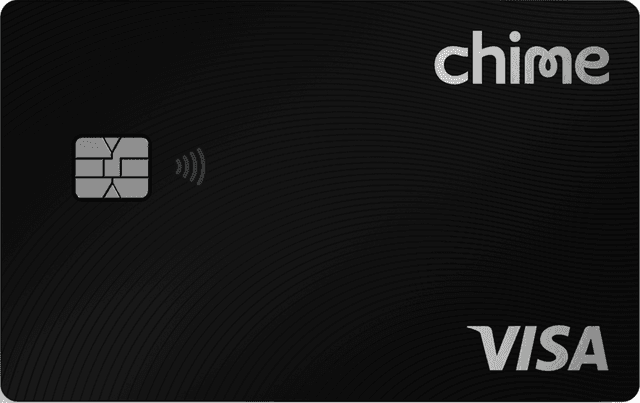
Chime Card is a Visa Signature secured credit card issued by fintech company Chime, with banking services provided by The Bancorp Bank, N.A. or Stride Bank, N.A. (both FDIC-insured). It introduces several structural innovations that set it meaningfully apart from traditional secured cards like the Capital One Platinum Secured.
Who It's For
Credit newcomers — immigrants and young adults — no credit score required, no hard credit check
Anyone who wants to eliminate debt risk — you can only spend what you've already deposited; no overspending possible
Users with steady direct deposits — $3,000/month in direct deposits unlocks 5% cash back, making this a genuinely competitive rewards card
Anyone unwilling to pay high APR — this card charges zero interest, eliminating the risk of carrying a balance and accumulating debt
To apply, you must also open a Chime Checking Account. No credit check is required. SSN/ITIN requirements are not explicitly stated on Chime's website and should be confirmed separately.
Fees & Costs
This card is essentially free to hold: $0 annual fee, $0 foreign transaction fee, $0 interest, and $0 late fees. The zero-interest structure is the standout feature — traditional secured cards typically carry APRs of 25–30%+, making this genuinely rare in the credit card space.
The only costs to watch for: if a statement balance goes unpaid for more than 24 days past the due date, the card is suspended until the balance is paid in full. Out-of-network ATM withdrawals cost $2.50.
Fee | Amount |
|---|---|
Annual fee | $0 |
Foreign transaction fee | $0 |
Interest (APR) | $0 (no interest — core differentiator) |
Late fee | $0 (card suspended if unpaid after 24 days) |
Monthly maintenance fee | $0 |
In-network ATM withdrawal | Free (47,000+ ATMs) |
Out-of-network ATM withdrawal | $2.50 per transaction |
Rewards
Cash back is tied to Chime's membership tiers, with direct deposit amount as the key qualifier:
Chime Prime — $3,000+/month in direct deposits → 5% cash back on one chosen category
Chime Plus — single deposit ≥ $200, or cumulative ≥ $400/month → 2% cash back on one chosen category
No qualifying direct deposit → no cash back
Each month, cardholders select one category to earn the maximum rate, capped at $1,500 in monthly spend (max $75/month at Prime tier). For users with a regular paycheck flowing into Chime, this effectively turns a credit-building tool into a competitive cash back card.
Eligible categories (choose one per month):
Utilities & bills (including streaming subscriptions)
Groceries & supermarkets
Gas
Travel & dining (flights, hotels, car rentals, rideshare, restaurants)
Credit-Building Mechanics
Chime Card differs from traditional secured cards in two structurally important ways:
1. Credit utilization is not reported. On a conventional secured card, spending close to your credit limit spikes your utilization ratio and can damage your credit score. Chime doesn't report utilization at all, so everyday spending has no negative impact on that metric.
2. Your deposit can pay off your balance. Funds in the Secured Deposit Account (SDA) can be used directly to pay your monthly statement — unlike most secured cards where the deposit is frozen until you close the account. With Safer Credit Building enabled, the system automatically pays your balance on the due date from your SDA, removing any risk of forgetting a payment.
Security Features
Feature | Details |
|---|---|
Zero liability | Visa Zero Liability Policy |
Card lock | Instant freeze on all transactions via app |
Real-time alerts | Supported |
Two-factor authentication | Supported (including fingerprint) |
Watch Out For
Checking Account required — this is not a standalone credit card. It's part of the Chime ecosystem and cannot be applied for independently.
5% cash back bar is high — $3,000/month in direct deposits is a meaningful threshold, and the $1,500 monthly spend cap means the maximum Prime cash back is $75/month.
Closing the account is permanent — once you close a Chime Card account, you cannot reopen one. Closure also shortens your credit history, which may negatively affect your score.
Digital-only support — Chime is a fintech, not a bank. Customer service is online-only with no physical branches; best suited for users comfortable with app-based banking.
SSN/ITIN policy unclear — unlike Capital One, Chime does not explicitly state whether ITIN is accepted. Suitability for new immigrants without an SSN requires independent verification.
Citi Double Cash®
On citi's website
Reward rate
2%-5%
Cashback
Annual fee
Free
Greater of $10 or 5% of each advance
Up to $41
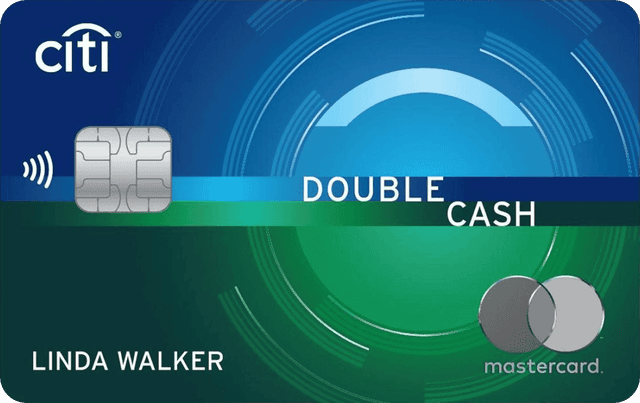
The Citi Double Cash® Card earns its reputation as one of the best flat-rate cash back cards in the US through sheer simplicity: a guaranteed 2% back on everything, with no categories to track and no annual fee. The mechanic — 1% when you buy, 1% when you pay — is unique in the market and implicitly rewards on-time payment behavior, though the second 1% is earned as long as any minimum payment is made.
The $200 welcome bonus requires $1,500 in spending over 6 months, which is a moderate bar — more than Chase Freedom Unlimited's $500 threshold, but achievable for most everyday spenders. The card's standout secondary feature is the 18-month 0% intro APR on balance transfers, one of the longest available in the market, making it a strong candidate for people consolidating high-interest debt.
A few things to be aware of: First, there is no 0% intro APR on purchases — interest accrues immediately on new spending, which makes this card unsuitable as a financing tool for large purchases. Second, the card carries a 3% foreign transaction fee, so it is not suitable for international use. Third, technically the 2% rewards come as ThankYou® Points; for basic cash redemption this is equivalent to 2 cents per dollar, but users with a premium Citi card (such as the Citi Strata℠ Premier) can combine points and transfer them to airline partners, unlocking significantly higher value. Fourth, the welcome bonus is not available if you've received a new account bonus on a Citi Double Cash account within the past 48 months — a longer exclusion window than most issuers.
This card is best suited for US residents with a credit score of 670 or above who want the simplest possible flat-rate cash back without paying an annual fee. It is particularly compelling for those carrying high-interest debt who want to consolidate via balance transfer while also having a solid everyday spending card.
Discover it® Secured Credit Card
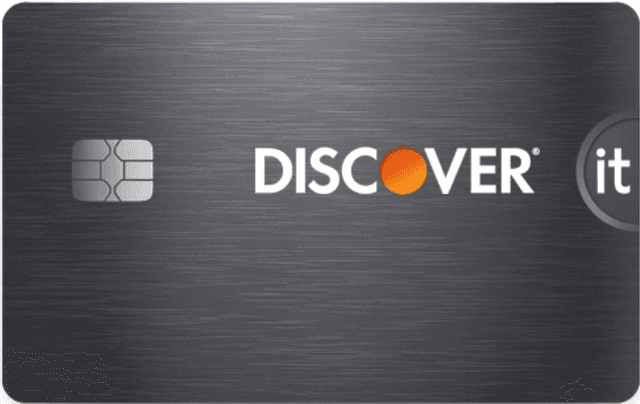
On DISCOVER's website
Reward rate
1%-2%
Cashback
Annual fee
Free
First late fee waiver
Best For: New immigrants and anyone starting with zero US credit history.
Requirements
Social Security Number (SSN)
US address
US bank account (required to fund the security deposit)
No prior credit history needed
Fees
Annual Fee | $0 |
Foreign Transaction Fee | $0 |
First Late Payment Fee | $0 |
Subsequent Late Payment Fee | Up to $41 |
Penalty APR | None |
Purchase APR | 26.49% Variable |
Balance Transfer APR | 10.99% intro for 6 months, then 26.49% |
Cash Advance APR | 28.49% Variable |
Security Deposit
Minimum | $200 |
Maximum | $2,500 |
Credit Line | Equals deposit amount |
Refund Eligibility | Automatic review after 7 months |
Rewards
Category | Rate | Cap |
|---|---|---|
Restaurants & Gas Stations | 2% | $1,000 combined per quarter |
All Other Purchases | 1% | Unlimited |
First-Year Cashback Match | 2x all rewards | No cap |
Watch Out The 26.49% purchase APR is high. Pay your balance in full every month — carrying a balance will cost you far more than any rewards earned. Also note that Discover has 99% acceptance in the US but weaker international coverage compared to Visa or Mastercard.
Discover it® Student Cash Back Credit Card

On DISCOVER's website
Reward rate
1%-5%
Cashback
Annual fee
Free
First late fee waived
The Discover it® Student Cash Back is one of the most rewarding starter cards available to college students with no credit history. It earns 5% cash back on rotating quarterly categories — such as grocery stores, restaurants, gas stations, and Amazon — on up to $1,500 in combined spending per quarter when activated, plus an unlimited 1% on everything else. In your first year, Discover automatically doubles every dollar of cash back you earn, making the effective rate 10% on bonus categories with no cap on the match.
Who this card is for
Ideal for college students enrolled in a U.S. university who have little to no credit history. Discover does not require a FICO score to apply, making this one of the few rewards cards genuinely accessible to international students and new arrivals building credit from scratch.
Things to know before applying
You must be enrolled in a college or university in the U.S.
A Social Security Number (SSN) is generally required. ITIN applicants may face difficulty.
Bonus categories rotate every quarter and must be manually activated each time — if you forget to activate, you earn only 1%.
The 5% rate applies to the first $1,500 in combined quarterly spending; purchases beyond that earn 1%.
Discover cards are accepted at 99% of U.S. merchants but have limited acceptance outside the U.S. — not the best card to rely on abroad.
Credit limits for student cards are typically low. Expect a starting limit of a few hundred to around $1,000.
Discover it® Student Chrome
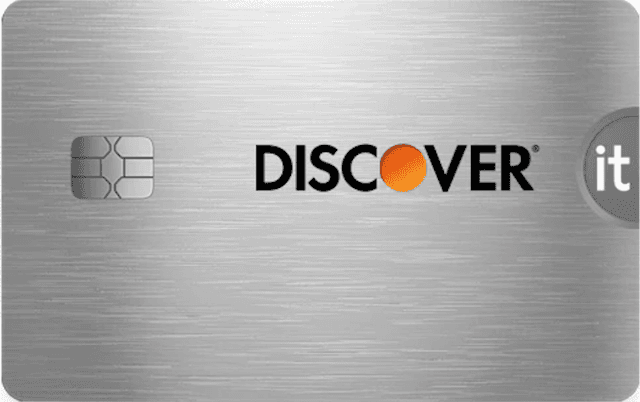
On DISCOVER's website
Reward rate
1%-2%
Cashback
Annual fee
Free
First late fee waived
The Discover it® Student Chrome offers a simpler, more predictable rewards structure than its rotating-category sibling. It earns 2% cash back at gas stations and restaurants on up to $1,000 in combined spending per quarter — no activation required — and 1% on all other purchases. Like all Discover student cards, it doubles your first year's cash back automatically through Cashback Match™, bringing the effective rate on gas and dining to 4% in year one.
Who this card is for
Best suited for students whose everyday spending is concentrated on food and transportation. If you drive regularly or eat out often and want rewards without the hassle of tracking rotating categories, this card delivers consistent value with minimal effort. Also a solid choice for students who prefer predictability over optimization.
Things to know before applying
You must be enrolled in a college or university in the U.S.
A Social Security Number (SSN) is generally required.
The 2% rate applies to the first $1,000 in combined gas and restaurant spending per quarter; beyond that, all purchases earn 1%.
No activation needed — bonus categories are fixed and always on.
No foreign transaction fees, which is useful if you travel or shop from international merchants — though Discover's overseas acceptance remains limited.
The 0% intro APR for 6 months on purchases can provide useful breathing room for large early expenses like textbooks or dorm supplies, but interest kicks in at up to 25.49% after the intro period ends.
Platinum Secured Credit Card from Capital One
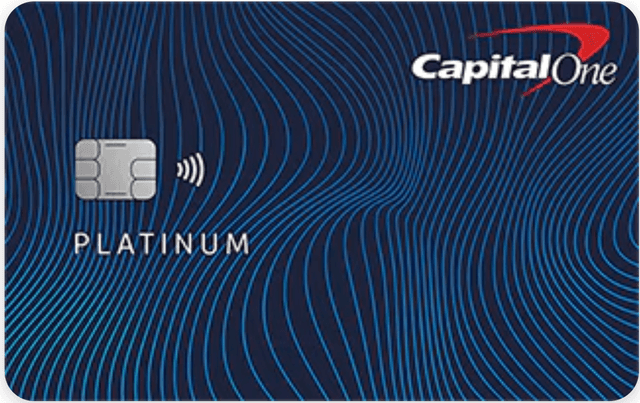
On CapitalOne's website
Reward rate
—
Annual fee
Free
First late fee waiver
Capital One Platinum Secured Credit Card is Capital One's entry-level secured card designed for people with no credit history or damaged credit. The value proposition is straightforward: zero carrying cost in exchange for a foothold in all three major U.S. credit bureaus.
Who It's For
This card works well for:
New immigrants in the U.S. — no SSN-based credit history, ineligible for standard credit cards (ITIN accepted)
Credit rebuilders — past delinquencies, collections, or bankruptcy and starting over
First-time cardholders — students or young adults with no credit file
Cost-conscious credit builders — anyone who wants to start building credit with $0 annual fee
No credit score is required to apply, though Capital One still reviews income and debt obligations — approval is not guaranteed.
Fees & Costs
The ongoing cost is minimal: $0 annual fee, $0 foreign transaction fee, no late fee on your first missed payment (up to $41 after that), and no penalty APR — a notable edge over many secured cards that spike your rate after a single late payment.
The main upfront cost is the security deposit. Depending on your creditworthiness, you may qualify for a $200 credit line with as little as a $49 deposit — more flexible than most competitors that require a dollar-for-dollar deposit match. You can deposit up to $1,000 for a higher initial limit. The deposit earns no interest and remains frozen until you upgrade or close the account.
Rewards
There are no rewards of any kind — no cash back, no points, no miles. If you want to earn while building credit, Capital One's Quicksilver Secured is the natural step up: same $0 annual fee, with 1.5% cash back on all purchases.
Credit-Building Features
The card reports to all three major bureaus — Experian, Equifax, and TransUnion — every month. After six months of responsible use, Capital One automatically reviews your account for a credit line increase with no additional deposit required. With consistent on-time payments, most cardholders graduate to an unsecured Platinum card within 12–18 months, at which point the security deposit is returned as a statement credit.
Feature | Details |
|---|---|
Bureau reporting | All 3 bureaus monthly |
Auto credit line review | After 6 months, no extra deposit needed |
Upgrade path | Unsecured Platinum card; deposit fully refunded |
Typical upgrade timeline | 12–18 months of on-time payments |
Free credit monitoring | CreditWise by Capital One (open to anyone) |
Watch Out For
High APR — ~29.49% variable. If you carry a balance, interest compounds fast. Pay in full every month, no exceptions.
Deposit ≠ payment — the security deposit cannot offset your monthly bill. They are completely separate obligations.
No set upgrade timeline — Capital One doesn't publish a graduation schedule. It's based on behavioral review, typically 12–18 months.
Cash advances accrue interest immediately — no grace period, at a rate higher than the purchase APR. Avoid entirely.
vs. Discover it® Secured — Discover offers 2% cash back at gas stations and restaurants plus a first-year cash back match, making it the stronger rewards option. However, Discover's network acceptance is narrower than Mastercard in some contexts — worth weighing against your spending habits.
Quicksilver Student Cash Rewards Credit Card
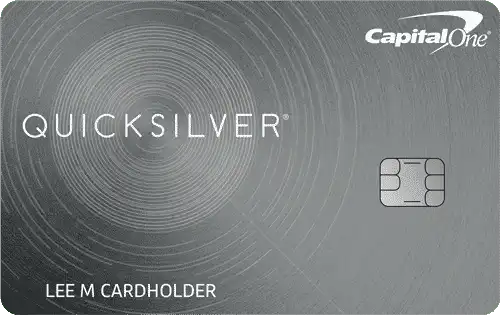
On CapitalOne's website
Reward rate
1.5%-5%
Cashback
Annual fee
Free
Choose the higher of the two
The Capital One Quicksilver Student Cash Rewards Credit Card is designed for college students and new immigrants who are just starting to build their US credit history. With no annual fee and no foreign transaction fees, it keeps costs low while rewarding every purchase with unlimited 1.5% cash back — no rotating categories, no activation required. Students planning to study abroad will also appreciate the card's Mastercard network acceptance in over 200 countries.
To apply, you need to be 18 or older with a US mailing address and an SSN or ITIN. No prior US credit history is required, making it one of the most accessible entry points into the US credit system. A low welcome bonus threshold — just $100 in spending to unlock $50 cash back — makes it easy to earn from day one.
One thing to keep in mind: the purchase APR ranges from 18.49% to 28.49%, which is on the higher end. This card works best if you pay your balance in full each month. Carrying a balance will quickly offset any cash back earned. The good news is that when you graduate, the card automatically converts to a standard Quicksilver card, so your credit history and rewards continue uninterrupted.
Wells Fargo Active Cash® Card
On wellsfargo's website
Reward rate
2%
Cashback
Annual fee
Free
Up to $40
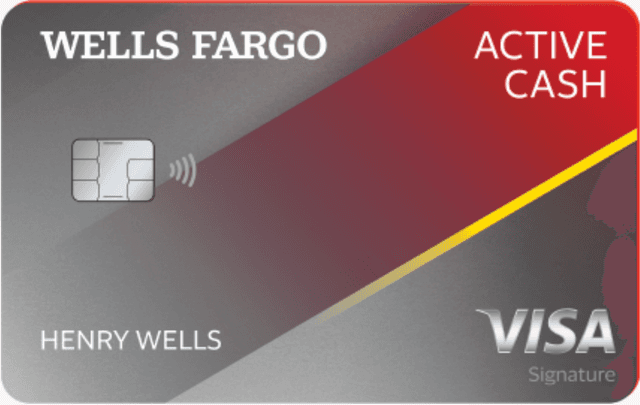
The Wells Fargo Active Cash® is the most straightforward of the major 2% flat-rate cash back cards, with one key advantage over its closest competitors: the 0% intro APR applies to both purchases and balance transfers simultaneously, whereas the Citi Double Cash only offers intro APR on balance transfers. This makes it the better choice for someone who wants to both finance a large purchase interest-free and consolidate existing debt at the same time.
The $200 welcome bonus is easy to earn — just $500 in 3 months, matching Chase Freedom Unlimited's threshold and well below Citi Double Cash's $1,500 requirement. The card is issued on the Visa Signature® network, which adds meaningful perks that the Citi Double Cash (Mastercard) doesn't include: cell phone protection of up to $600 per claim (when you pay your bill with the card), auto rental collision damage waiver, and Visa Luxury Hotel Collection access.
A few things worth noting: First, the card has a 3% foreign transaction fee, making it unsuitable for international spending. Second, the balance transfer must be requested within 120 days of account opening to qualify for both the intro rate and the 3% intro fee — after that, the fee rises to 5% (minimum $5). Third, balance transfers from other Wells Fargo credit cards are not eligible. Fourth, like most Wells Fargo cards, the welcome bonus is subject to a 48-month exclusion window. Fifth, the intro APR period is only 12 months, shorter than Citi Double Cash's 18-month balance transfer offer — making it a weaker option for large debt consolidation specifically.
This card is best suited for US residents with a credit score of 670 or above who want clean, unlimited 2% cash back with no complexity. It's particularly attractive for those who also pay a monthly cell phone bill and want the added insurance coverage at no extra cost. For someone choosing between this and Citi Double Cash, the key deciding factor is intent: if you need a longer window for debt payoff, Citi wins; if you want intro APR on purchases too and want Visa Signature benefits, Active Cash wins.
Not sure which card fits you?
Enter your spending → see your best match
Showing 16 / 16 cards
American Express® Gold Card
Reward rate
1x-5x
Points
Annual fee
325US$
Up to $40
The American Express® Gold Card is the dominant dining and grocery rewards card in the US market, with 4x points at restaurants worldwide and 4x at US supermarkets forming a powerful base for everyday spending. The April 2026 refresh added 5x on prepaid hotels via Amex Travel, making the card meaningfully more competitive for travel bookings as well.
A few structural points that are essential for overseas Chinese users to understand upfront: First, this is technically a charge card with a Pay Over Time option, not a standard revolving credit card. The default expectation is full monthly payment; carrying a balance requires opting into Pay Over Time (with a 19.49%–28.49% variable APR) or Plan It® (fixed monthly fee). This is fundamentally different from every other card in this database. Second, American Express acceptance is not universal — while coverage has improved substantially, some small US merchants and most merchants in certain countries outside North America and Europe do not accept Amex. For overseas Chinese users who frequently shop at Asian supermarkets or smaller businesses, this is a practical limitation worth flagging. Third, Amex uses its own credit evaluation process and does not publish fixed score thresholds; approval is harder to predict than Chase or Citi.
The welcome offer structure is also unusual: Amex uses personalized offers rather than a single published rate. The headline "up to 100,000 points" is not guaranteed — many applicants receive lower offers. Additionally, Amex enforces a once-per-lifetime rule on welcome bonuses: if you have ever held this card and received a welcome offer, you will not receive another, regardless of how many years have passed. This is stricter than Chase's 24–48 month windows.
For someone who uses the credits correctly, the effective annual fee math is compelling: $325 fee minus $120 dining credit minus $120 Uber Cash minus $100 Resy credit minus $84 Dunkin' credit = effectively negative $99 — the card pays you to hold it, assuming you can consume all four credits. In practice, the dining credit partners are limited and the Resy and Dunkin' credits require specific behaviors; users who don't order from Grubhub or don't drink Dunkin' will fail to extract the full offset.
The Membership Rewards transfer ecosystem is one of the most valuable in the US, with 20+ partners including Air Canada Aeroplan (a key partner for transpacific redemptions) and Singapore Airlines KrisFlyer. This gives the card meaningful long-term value beyond everyday cash back for overseas Chinese users who travel between North America and Asia.
This card is best suited for US residents with 700+ credit scores who spend heavily on dining and groceries, can engage with the credit stack, and either pay in full monthly or deliberately use Pay Over Time for planned large purchases.
Apple Card
Reward rate
1%-3%
Cashback
Annual fee
Free
Not supported (Goldman Sachs does not offer this feature)
The Apple Card is built for iPhone users who pay with Apple Pay regularly. With no annual fee, no foreign transaction fee, and no late fee, it offers one of the cleanest fee structures of any major US credit card. Rewards come in the form of Daily Cash — credited to your account the same day a purchase posts — with 3% back at Apple and select partners like Nike, Uber, Walgreens, and Booking.com, 2% back on all other Apple Pay purchases, and 1% back when using the physical titanium card.
To get the most out of this card, Apple Pay needs to be your default payment method. The 2% rate on general Apple Pay spending is competitive with flat-rate cards, but the moment you reach for the physical card — at merchants that don't support contactless payment, or when entering card details online manually — that rate drops to 1%, which is below average. If a significant portion of your spending happens at places that don't accept Apple Pay, the effective return rate will be lower than it appears.
A few things worth clarifying: First, there is no sign-up bonus. Unlike most US cashback cards that offer $150–$200 welcome bonuses, Apple Card has never offered one. Second, cash advances are not supported — Goldman Sachs does not offer this feature on Apple Card. Third, the 3% partner merchant list changes over time; always verify on Apple's benefits page before assuming a merchant qualifies. Fourth, this card requires an iPhone to apply and manage — there is no web-based account management equivalent to a standard bank portal.
The card is best suited for someone with a FICO score of 670 or above who is already embedded in the Apple ecosystem. It is not a good first card for someone building credit from scratch, and it is not the right card if you frequently shop at merchants that don't accept Apple Pay.
Blue Cash Everyday® Card from American Express
Reward rate
1%-3%
Cashback
Annual fee
Free
Up to $40
The Blue Cash Everyday® Card from American Express is a straightforward no-annual-fee cash back card built around three everyday spending categories: U.S. supermarkets, U.S. gas stations, and U.S. online retail purchases, each earning 3% cash back on up to $6,000 per year (then 1%). All other purchases earn 1%.
This card is a natural entry point for overseas Chinese users new to the U.S. credit system. It requires no annual fee commitment, has a relatively accessible credit score threshold (Good, 670+), and its reward structure is simple enough to use without optimization. The $200 welcome offer requires only $2,000 in spending over 6 months — a realistic target for most households.
A few things worth noting upfront: First, the 3% categories each carry a $6,000 annual cap ($500/month equivalent). For high spenders in any single category, this card stops being the best tool after the cap is reached — you'll want a second card to handle overflow. Second, this card charges a 2.7% foreign transaction fee, making it unsuitable for international purchases or travel abroad. Third, like all Amex products, acceptance is not universal at smaller U.S. merchants, though coverage at mainstream U.S. retailers is generally strong.
The two statement credits are meaningful but conditional. The $84 Disney Bundle credit ($7/month) only applies to the bundled Disney+/Hulu/ESPN+ subscription at $9.99 or more and requires enrollment. The $180 Home Chef credit($15/month) requires an active Home Chef meal kit subscription — useful only if that service fits your household. If you don't use either service, these credits are worth $0, not $264.
The 0% intro APR for 15 months on both purchases and balance transfers is one of the strongest no-fee offers on the market, and NerdWallet named this card the 2026 Best 0% APR Credit Card for Purchases. For someone consolidating debt or making a large planned purchase, this feature alone can justify holding the card.
Cash back is issued as Reward Dollars, which can only be redeemed as statement credits or at Amazon.com checkout — not transferred to airline or hotel partners. If your goal is travel rewards or points flexibility, this card is not the right tool; consider the Amex Gold Card or a Chase Sapphire product instead.
This card is best suited for U.S. residents or new immigrants who spend regularly on groceries, gas, and online shopping, want a simple and free card as a primary or backup card, and may benefit from the intro APR period.
Capital One Venture X Rewards Credit Card
Reward rate
2x-10x
Points
Annual fee
395US$
Up to $40
The Capital One Venture X is the simplest premium travel card in the US market to justify financially. The math is almost embarrassingly clean: $395 annual fee, minus $300 travel credit, minus 10,000 anniversary miles worth $100 in travel = net cost of approximately negative $5 per year for any cardholder who uses the portal. No complex monthly credit stacks, no narrow partner restrictions, no enrollment hoops — just two automatic benefits that cover the fee.
The earning structure reinforces this simplicity. Portal bookings earn 10x (hotels, rental cars) and 5x (flights, vacation rentals), but even off-portal the flat 2x on everything makes it one of the best everyday spending cards in the premium category. A cardholder who puts all their spending on this card earns at minimum 2 cents per dollar in travel value — a rate that beats most no-annual-fee cards.
Miles can be redeemed at 1 cent each through Capital One Travel (fixed value) or transferred to 15+ partners including Air Canada Aeroplan, Singapore Airlines KrisFlyer, Turkish Airlines Miles&Smiles, and Avianca LifeMiles. The transfer ecosystem is smaller than Chase or Amex but includes several high-value sweet spots for transpacific redemptions — Aeroplan in particular is a key partner for overseas Chinese users traveling between North America and Asia.
However, a significant lounge policy change took effect February 1, 2026 that meaningfully reduces the card's value proposition for travelers with companions. The previously unlimited free guest access to Capital One Lounges was eliminated; guests now cost $45 per adult. Authorized users no longer receive lounge access automatically — they must pay a $125 annual fee per person to unlock it. Priority Pass guest access was also removed (guests now $35 each). The only exception: primary cardholders who spend $75,000 in a calendar year unlock complimentary guest access for that year and the next. This change has generated considerable dissatisfaction among cardholders (visible in recent reviews) and is a material downgrade from the card's launch proposition.
A few other important notes: First, Capital One does not impose a penalty APR — a rare and cardholder-friendly policy. Second, the authorized user fee remains $0 despite the lounge access change, which preserves value for couples managing a shared rewards balance. Third, Capital One's transfer partners skew toward international carriers (Avianca, Turkish, Wyndham) with fewer domestic US airline options compared to Chase; travelers primarily flying domestic US routes may find the Chase ecosystem more useful.
This card is best suited for US residents with 740+ credit scores who want straightforward premium travel rewards without managing a complex credit stack. It is the most defensible premium card for a traveler who primarily flies solo, books through portals, and wants near-zero effective annual fee without doing mental math every month.
Chase Freedom Flex®
Reward rate
1%-5%
Cashback
Annual fee
Free
$10 or 5% of amount, whichever is greater
Up to $40
Chase Freedom Flex® is a no-annual-fee cash back credit card issued by Chase (JPMorgan Chase), running on the Mastercard network. It is well-suited for everyday spenders who want to maximize returns across multiple spending categories without paying an annual fee.
Who It's For
Ideal for US residents with good to fair credit (580+) who are building or strengthening their credit history. Particularly relevant for new immigrants who have obtained an SSN and established some credit foundation, young professionals managing everyday expenses, and budget-conscious consumers who prefer straightforward cash back over complex points systems.
How You Earn
Freedom Flex uses a tiered cash back structure. The headline feature is a 5% quarterly rotating category — each quarter, Chase designates specific merchant categories (such as grocery stores, gas stations, Amazon, or dining) where cardholders earn 5% back on up to $1,500 in combined purchases, after activation. Beyond that, the card offers a permanent 5% on Chase Travel bookings, 3% on dining and drugstores, and 1% on everything else. A Lyft bonus (2% total through September 2027) adds additional value for ride-share users.
Welcome Offer
New cardmembers can earn a $200 cash back bonus after spending $500 within the first 3 months of account opening. Not available to current cardmembers or those who received this bonus within the past 24 months.
Key Benefits
The card comes with a strong suite of protections: cell phone protection (up to $800 per claim), purchase protection (120 days), extended warranty, trip cancellation insurance (up to $6,000 per trip), and auto rental coverage. New cardmembers also receive 6 months of complimentary DashPass (DoorDash/Caviar).
Things to Watch
Freedom Flex charges a 3% foreign transaction fee, making it unsuitable for international travel spending. The 5% rotating categories require manual quarterly activation — missing the activation window means losing the bonus rate entirely. The regular APR (18.24%–27.74%) is relatively high, so carrying a balance will quickly erode any rewards earned. SSN is required for application, which limits accessibility for very new arrivals without an established credit file.
Chase Freedom Unlimited®
Reward rate
1.5%-5%
Cashback
Annual fee
Free
Up to $40
The Chase Freedom Unlimited® is one of the most versatile no-annual-fee cash back cards in the US market. Its tiered rewards structure — 5% on Chase Travel, 3% on dining and drugstores, and a flat 1.5% on everything else — makes it a strong everyday card, especially for people who eat out frequently or want a reliable catch-all rate without tracking rotating categories.
The $200 welcome bonus is achievable with just $500 in spending over 3 months, which is a low bar compared to most competing cards. Combined with the 15-month 0% intro APR on both purchases and balance transfers, this card is also worth considering for those who need short-term financing flexibility.
A few things to keep in mind: First, there is a 3% foreign transaction fee, making this card a poor choice for international spending — users who travel or shop abroad should pair it with a no-FX-fee card. Second, the 5% travel rate is only for bookings through the Chase Travel portal; travel purchased directly through airlines or hotels earns just 1.5%. Third, Chase applies the 5/24 rule — applicants who have opened 5 or more credit cards (across all banks) in the past 24 months will typically be denied, regardless of credit score.
This card is best suited for US residents with a credit score of 670 or above who want simple, uncapped cash back without an annual fee. It works especially well as a companion to a Chase Sapphire card, where cash back points can be converted to Ultimate Rewards and transferred to airline and hotel partners at higher value.
Chase Sapphire Preferred® Card
Reward rate
1x-5x
Points
Annual fee
95US$
The Chase Sapphire Preferred® is the most recommended entry-level travel rewards card in the US market — and for good reason. At $95 per year, it offers a combination of earning rates, transfer partners, and travel protections that no no-annual-fee card comes close to matching. The 75,000-point welcome bonus alone is worth $937.50 through Chase Travel or $1,125–$1,500+ when transferred to partners like Hyatt or Singapore Airlines KrisFlyer, making the first year's value proposition essentially unassailable.
The card's core strength is the Ultimate Rewards ecosystem. Points are worth 1.25 cents each through Chase Travel, but transfer 1:1 to 14 partners — including United, Air Canada Aeroplan, Singapore Airlines, and Hyatt — where experienced users regularly extract 2–3 cents per point on premium cabin flights or luxury hotel stays. For overseas Chinese users in particular, Air Canada Aeroplan offers strong value on transpacific awards, and Singapore Airlines KrisFlyer is one of the most accessible premium cabin redemption programs for Asia routes.
A few things to understand clearly: First, the $5,000 spending requirement for the welcome bonus is significantly higher than Freedom Unlimited ($500) or Wells Fargo Active Cash ($500) — it's targeting people with real spending volume. Second, there is no intro APR on purchases or balance transfers; this is not a card for financing. Third, the 5/24 rule applies — Chase will typically deny applicants who have opened 5+ cards across all banks in the past 24 months. Fourth, the $50 hotel credit is restricted to bookings through Chase Travel, and those hotel purchases are excluded from the 5x earning rate (earning only 1x instead) — a trade-off worth noting. Fifth, the welcome bonus exclusion is open-ended: Chase may deny the bonus based on prior card history and the number of cards opened and closed, with no fixed time window published.
The card is best suited for US residents with a credit score of 700+ who travel at least a few times per year, dine out regularly, and are willing to engage with the points transfer ecosystem. It is the natural companion card to the no-annual-fee Chase Freedom Unlimited or Freedom Flex — pairing the two allows all cash back earned on those cards to be converted to transferable Ultimate Rewards points, a well-known optimization in the US points community.
Chase Sapphire Reserve® Card
Reward rate
1x-10x
Points
Annual fee
795US$
Up to $40
The Chase Sapphire Reserve® underwent a major overhaul in 2025, with the annual fee increasing from $550 to $795 — but with a substantially expanded benefits package that, for frequent travelers who actively use the credits, can produce well over $3,000 in annual value against that $795 cost.
The card's earning structure is now among the strongest in the market: 8x on Chase Travel (including The Edit curated hotel collection), 4x on direct-booked flights and hotels, and 3x on all dining worldwide. Points are worth 1.5 cents each through Chase Travel (vs. 1.25 cents on the Preferred), and transfer 1:1 to the same 14 airline and hotel partners. The 150,000-point limited-time welcome bonus — worth $2,250 at minimum through Chase Travel and potentially $3,000–$4,500+ when transferred to premium partners like Hyatt or Singapore Airlines — is one of the most valuable offers currently available in the US premium card market.
The credits require active management to capture full value. The $300 travel credit is the easiest: it applies automatically to virtually any travel purchase. The $300 dining credit requires booking through Sapphire Exclusive Tables on OpenTable (a curated restaurant list, not universally applicable). The $500 Edit hotel credit, $300 StubHub credit, and lifestyle credits (Apple, Lyft, Peloton, DoorDash) each require activation and specific usage patterns. Users who don't travel frequently, don't dine at participating restaurants, or won't engage with the partner ecosystem will not be able to extract value commensurate with the $795 fee.
Key things to be clear about: First, the $6,000 spending requirement for the bonus is the highest of any Chase card covered here, targeting users with substantial monthly spend. Second, 5/24 rule applies and cannot be circumvented. Third, the authorized user fee is $195 — unusually high, making it costly to share benefits with a partner. Fourth, purchases qualifying for the $300 travel credit and $500 Edit credit explicitly do not earn points, a design trade-off that reduces the effective earning rate on some travel spend. Fifth, as with Preferred, the welcome bonus eligibility is at Chase's discretion with no fixed exclusion window published.
This card is best suited for US residents with a 720+ credit score who travel internationally multiple times per year, spend heavily on dining, and are willing to optimize the annual credit stack. For the overseas Chinese community specifically, this card's combination of no FX fee, Priority Pass lounge access (valuable for layovers in Asia), and 1:1 transfer to Air Canada Aeroplan and Singapore Airlines KrisFlyer makes it a strong long-term card for those who fly between North America and Asia regularly.
Chime Card
Reward rate
—
Annual fee
Free
Chime Card is a Visa Signature secured credit card issued by fintech company Chime, with banking services provided by The Bancorp Bank, N.A. or Stride Bank, N.A. (both FDIC-insured). It introduces several structural innovations that set it meaningfully apart from traditional secured cards like the Capital One Platinum Secured.
Who It's For
Credit newcomers — immigrants and young adults — no credit score required, no hard credit check
Anyone who wants to eliminate debt risk — you can only spend what you've already deposited; no overspending possible
Users with steady direct deposits — $3,000/month in direct deposits unlocks 5% cash back, making this a genuinely competitive rewards card
Anyone unwilling to pay high APR — this card charges zero interest, eliminating the risk of carrying a balance and accumulating debt
To apply, you must also open a Chime Checking Account. No credit check is required. SSN/ITIN requirements are not explicitly stated on Chime's website and should be confirmed separately.
Fees & Costs
This card is essentially free to hold: $0 annual fee, $0 foreign transaction fee, $0 interest, and $0 late fees. The zero-interest structure is the standout feature — traditional secured cards typically carry APRs of 25–30%+, making this genuinely rare in the credit card space.
The only costs to watch for: if a statement balance goes unpaid for more than 24 days past the due date, the card is suspended until the balance is paid in full. Out-of-network ATM withdrawals cost $2.50.
Fee | Amount |
|---|---|
Annual fee | $0 |
Foreign transaction fee | $0 |
Interest (APR) | $0 (no interest — core differentiator) |
Late fee | $0 (card suspended if unpaid after 24 days) |
Monthly maintenance fee | $0 |
In-network ATM withdrawal | Free (47,000+ ATMs) |
Out-of-network ATM withdrawal | $2.50 per transaction |
Rewards
Cash back is tied to Chime's membership tiers, with direct deposit amount as the key qualifier:
Chime Prime — $3,000+/month in direct deposits → 5% cash back on one chosen category
Chime Plus — single deposit ≥ $200, or cumulative ≥ $400/month → 2% cash back on one chosen category
No qualifying direct deposit → no cash back
Each month, cardholders select one category to earn the maximum rate, capped at $1,500 in monthly spend (max $75/month at Prime tier). For users with a regular paycheck flowing into Chime, this effectively turns a credit-building tool into a competitive cash back card.
Eligible categories (choose one per month):
Utilities & bills (including streaming subscriptions)
Groceries & supermarkets
Gas
Travel & dining (flights, hotels, car rentals, rideshare, restaurants)
Credit-Building Mechanics
Chime Card differs from traditional secured cards in two structurally important ways:
1. Credit utilization is not reported. On a conventional secured card, spending close to your credit limit spikes your utilization ratio and can damage your credit score. Chime doesn't report utilization at all, so everyday spending has no negative impact on that metric.
2. Your deposit can pay off your balance. Funds in the Secured Deposit Account (SDA) can be used directly to pay your monthly statement — unlike most secured cards where the deposit is frozen until you close the account. With Safer Credit Building enabled, the system automatically pays your balance on the due date from your SDA, removing any risk of forgetting a payment.
Security Features
Feature | Details |
|---|---|
Zero liability | Visa Zero Liability Policy |
Card lock | Instant freeze on all transactions via app |
Real-time alerts | Supported |
Two-factor authentication | Supported (including fingerprint) |
Watch Out For
Checking Account required — this is not a standalone credit card. It's part of the Chime ecosystem and cannot be applied for independently.
5% cash back bar is high — $3,000/month in direct deposits is a meaningful threshold, and the $1,500 monthly spend cap means the maximum Prime cash back is $75/month.
Closing the account is permanent — once you close a Chime Card account, you cannot reopen one. Closure also shortens your credit history, which may negatively affect your score.
Digital-only support — Chime is a fintech, not a bank. Customer service is online-only with no physical branches; best suited for users comfortable with app-based banking.
SSN/ITIN policy unclear — unlike Capital One, Chime does not explicitly state whether ITIN is accepted. Suitability for new immigrants without an SSN requires independent verification.
Citi Double Cash®
Reward rate
2%-5%
Cashback
Annual fee
Free
Greater of $10 or 5% of each advance
Up to $41
The Citi Double Cash® Card earns its reputation as one of the best flat-rate cash back cards in the US through sheer simplicity: a guaranteed 2% back on everything, with no categories to track and no annual fee. The mechanic — 1% when you buy, 1% when you pay — is unique in the market and implicitly rewards on-time payment behavior, though the second 1% is earned as long as any minimum payment is made.
The $200 welcome bonus requires $1,500 in spending over 6 months, which is a moderate bar — more than Chase Freedom Unlimited's $500 threshold, but achievable for most everyday spenders. The card's standout secondary feature is the 18-month 0% intro APR on balance transfers, one of the longest available in the market, making it a strong candidate for people consolidating high-interest debt.
A few things to be aware of: First, there is no 0% intro APR on purchases — interest accrues immediately on new spending, which makes this card unsuitable as a financing tool for large purchases. Second, the card carries a 3% foreign transaction fee, so it is not suitable for international use. Third, technically the 2% rewards come as ThankYou® Points; for basic cash redemption this is equivalent to 2 cents per dollar, but users with a premium Citi card (such as the Citi Strata℠ Premier) can combine points and transfer them to airline partners, unlocking significantly higher value. Fourth, the welcome bonus is not available if you've received a new account bonus on a Citi Double Cash account within the past 48 months — a longer exclusion window than most issuers.
This card is best suited for US residents with a credit score of 670 or above who want the simplest possible flat-rate cash back without paying an annual fee. It is particularly compelling for those carrying high-interest debt who want to consolidate via balance transfer while also having a solid everyday spending card.
Discover it® Secured Credit Card
Reward rate
1%-2%
Cashback
Annual fee
Free
First late fee waiver
Best For: New immigrants and anyone starting with zero US credit history.
Requirements
Social Security Number (SSN)
US address
US bank account (required to fund the security deposit)
No prior credit history needed
Fees
Annual Fee | $0 |
Foreign Transaction Fee | $0 |
First Late Payment Fee | $0 |
Subsequent Late Payment Fee | Up to $41 |
Penalty APR | None |
Purchase APR | 26.49% Variable |
Balance Transfer APR | 10.99% intro for 6 months, then 26.49% |
Cash Advance APR | 28.49% Variable |
Security Deposit
Minimum | $200 |
Maximum | $2,500 |
Credit Line | Equals deposit amount |
Refund Eligibility | Automatic review after 7 months |
Rewards
Category | Rate | Cap |
|---|---|---|
Restaurants & Gas Stations | 2% | $1,000 combined per quarter |
All Other Purchases | 1% | Unlimited |
First-Year Cashback Match | 2x all rewards | No cap |
Watch Out The 26.49% purchase APR is high. Pay your balance in full every month — carrying a balance will cost you far more than any rewards earned. Also note that Discover has 99% acceptance in the US but weaker international coverage compared to Visa or Mastercard.
Discover it® Student Cash Back Credit Card
Reward rate
1%-5%
Cashback
Annual fee
Free
First late fee waived
The Discover it® Student Cash Back is one of the most rewarding starter cards available to college students with no credit history. It earns 5% cash back on rotating quarterly categories — such as grocery stores, restaurants, gas stations, and Amazon — on up to $1,500 in combined spending per quarter when activated, plus an unlimited 1% on everything else. In your first year, Discover automatically doubles every dollar of cash back you earn, making the effective rate 10% on bonus categories with no cap on the match.
Who this card is for
Ideal for college students enrolled in a U.S. university who have little to no credit history. Discover does not require a FICO score to apply, making this one of the few rewards cards genuinely accessible to international students and new arrivals building credit from scratch.
Things to know before applying
You must be enrolled in a college or university in the U.S.
A Social Security Number (SSN) is generally required. ITIN applicants may face difficulty.
Bonus categories rotate every quarter and must be manually activated each time — if you forget to activate, you earn only 1%.
The 5% rate applies to the first $1,500 in combined quarterly spending; purchases beyond that earn 1%.
Discover cards are accepted at 99% of U.S. merchants but have limited acceptance outside the U.S. — not the best card to rely on abroad.
Credit limits for student cards are typically low. Expect a starting limit of a few hundred to around $1,000.
Discover it® Student Chrome
Reward rate
1%-2%
Cashback
Annual fee
Free
First late fee waived
The Discover it® Student Chrome offers a simpler, more predictable rewards structure than its rotating-category sibling. It earns 2% cash back at gas stations and restaurants on up to $1,000 in combined spending per quarter — no activation required — and 1% on all other purchases. Like all Discover student cards, it doubles your first year's cash back automatically through Cashback Match™, bringing the effective rate on gas and dining to 4% in year one.
Who this card is for
Best suited for students whose everyday spending is concentrated on food and transportation. If you drive regularly or eat out often and want rewards without the hassle of tracking rotating categories, this card delivers consistent value with minimal effort. Also a solid choice for students who prefer predictability over optimization.
Things to know before applying
You must be enrolled in a college or university in the U.S.
A Social Security Number (SSN) is generally required.
The 2% rate applies to the first $1,000 in combined gas and restaurant spending per quarter; beyond that, all purchases earn 1%.
No activation needed — bonus categories are fixed and always on.
No foreign transaction fees, which is useful if you travel or shop from international merchants — though Discover's overseas acceptance remains limited.
The 0% intro APR for 6 months on purchases can provide useful breathing room for large early expenses like textbooks or dorm supplies, but interest kicks in at up to 25.49% after the intro period ends.
Platinum Secured Credit Card from Capital One
Reward rate
—
Annual fee
Free
First late fee waiver
Capital One Platinum Secured Credit Card is Capital One's entry-level secured card designed for people with no credit history or damaged credit. The value proposition is straightforward: zero carrying cost in exchange for a foothold in all three major U.S. credit bureaus.
Who It's For
This card works well for:
New immigrants in the U.S. — no SSN-based credit history, ineligible for standard credit cards (ITIN accepted)
Credit rebuilders — past delinquencies, collections, or bankruptcy and starting over
First-time cardholders — students or young adults with no credit file
Cost-conscious credit builders — anyone who wants to start building credit with $0 annual fee
No credit score is required to apply, though Capital One still reviews income and debt obligations — approval is not guaranteed.
Fees & Costs
The ongoing cost is minimal: $0 annual fee, $0 foreign transaction fee, no late fee on your first missed payment (up to $41 after that), and no penalty APR — a notable edge over many secured cards that spike your rate after a single late payment.
The main upfront cost is the security deposit. Depending on your creditworthiness, you may qualify for a $200 credit line with as little as a $49 deposit — more flexible than most competitors that require a dollar-for-dollar deposit match. You can deposit up to $1,000 for a higher initial limit. The deposit earns no interest and remains frozen until you upgrade or close the account.
Rewards
There are no rewards of any kind — no cash back, no points, no miles. If you want to earn while building credit, Capital One's Quicksilver Secured is the natural step up: same $0 annual fee, with 1.5% cash back on all purchases.
Credit-Building Features
The card reports to all three major bureaus — Experian, Equifax, and TransUnion — every month. After six months of responsible use, Capital One automatically reviews your account for a credit line increase with no additional deposit required. With consistent on-time payments, most cardholders graduate to an unsecured Platinum card within 12–18 months, at which point the security deposit is returned as a statement credit.
Feature | Details |
|---|---|
Bureau reporting | All 3 bureaus monthly |
Auto credit line review | After 6 months, no extra deposit needed |
Upgrade path | Unsecured Platinum card; deposit fully refunded |
Typical upgrade timeline | 12–18 months of on-time payments |
Free credit monitoring | CreditWise by Capital One (open to anyone) |
Watch Out For
High APR — ~29.49% variable. If you carry a balance, interest compounds fast. Pay in full every month, no exceptions.
Deposit ≠ payment — the security deposit cannot offset your monthly bill. They are completely separate obligations.
No set upgrade timeline — Capital One doesn't publish a graduation schedule. It's based on behavioral review, typically 12–18 months.
Cash advances accrue interest immediately — no grace period, at a rate higher than the purchase APR. Avoid entirely.
vs. Discover it® Secured — Discover offers 2% cash back at gas stations and restaurants plus a first-year cash back match, making it the stronger rewards option. However, Discover's network acceptance is narrower than Mastercard in some contexts — worth weighing against your spending habits.
Quicksilver Student Cash Rewards Credit Card
Reward rate
1.5%-5%
Cashback
Annual fee
Free
Choose the higher of the two
The Capital One Quicksilver Student Cash Rewards Credit Card is designed for college students and new immigrants who are just starting to build their US credit history. With no annual fee and no foreign transaction fees, it keeps costs low while rewarding every purchase with unlimited 1.5% cash back — no rotating categories, no activation required. Students planning to study abroad will also appreciate the card's Mastercard network acceptance in over 200 countries.
To apply, you need to be 18 or older with a US mailing address and an SSN or ITIN. No prior US credit history is required, making it one of the most accessible entry points into the US credit system. A low welcome bonus threshold — just $100 in spending to unlock $50 cash back — makes it easy to earn from day one.
One thing to keep in mind: the purchase APR ranges from 18.49% to 28.49%, which is on the higher end. This card works best if you pay your balance in full each month. Carrying a balance will quickly offset any cash back earned. The good news is that when you graduate, the card automatically converts to a standard Quicksilver card, so your credit history and rewards continue uninterrupted.
Wells Fargo Active Cash® Card
Reward rate
2%
Cashback
Annual fee
Free
Up to $40
The Wells Fargo Active Cash® is the most straightforward of the major 2% flat-rate cash back cards, with one key advantage over its closest competitors: the 0% intro APR applies to both purchases and balance transfers simultaneously, whereas the Citi Double Cash only offers intro APR on balance transfers. This makes it the better choice for someone who wants to both finance a large purchase interest-free and consolidate existing debt at the same time.
The $200 welcome bonus is easy to earn — just $500 in 3 months, matching Chase Freedom Unlimited's threshold and well below Citi Double Cash's $1,500 requirement. The card is issued on the Visa Signature® network, which adds meaningful perks that the Citi Double Cash (Mastercard) doesn't include: cell phone protection of up to $600 per claim (when you pay your bill with the card), auto rental collision damage waiver, and Visa Luxury Hotel Collection access.
A few things worth noting: First, the card has a 3% foreign transaction fee, making it unsuitable for international spending. Second, the balance transfer must be requested within 120 days of account opening to qualify for both the intro rate and the 3% intro fee — after that, the fee rises to 5% (minimum $5). Third, balance transfers from other Wells Fargo credit cards are not eligible. Fourth, like most Wells Fargo cards, the welcome bonus is subject to a 48-month exclusion window. Fifth, the intro APR period is only 12 months, shorter than Citi Double Cash's 18-month balance transfer offer — making it a weaker option for large debt consolidation specifically.
This card is best suited for US residents with a credit score of 670 or above who want clean, unlimited 2% cash back with no complexity. It's particularly attractive for those who also pay a monthly cell phone bill and want the added insurance coverage at no extra cost. For someone choosing between this and Citi Double Cash, the key deciding factor is intent: if you need a longer window for debt payoff, Citi wins; if you want intro APR on purchases too and want Visa Signature benefits, Active Cash wins.